Can India Become a Semiconductor Powerhouse by 2035?
The semiconductor world post-COVID: why is everyone suddenly talking about semiconductor chips?
Why is everyone suddenly talking about semiconductor chips?
Before COVID-19, most people had never really thought about semiconductor chips. These chips powered our phones, laptops, medical devices, and almost every piece of modern technology. They were just there when desired, and hence there was little reason to wonder where they came from.
Then COVID-19 struck and changed everything. Factories shut down, and global supply chains struggled to keep up. A tiny chip worth a few dollars became one of the biggest bottlenecks for large industries. Automotive manufacturers slowed production as electronics became harder to buy. Everyone started asking the same question: how did we become so dependent on such a fragile supply chain?
Among other nations, for India, this was the moment the dependency became impossible to ignore. Before the pandemic, India imported almost all the semiconductor chips it used. It was definitely not a weakness since everything was running smoothly without any disruptions in the supply chain. India was a global leader in chip design as Indian engineers contributed to several products used across the world. But manufacturing remained concentrated in other regions of the world.
The COVID pandemic exposed the risks of this working model. In addition, it also created an opportunity.
| Period | Import dependence | What happened |
|---|---|---|
| 2019 (Pre-COVID) | ~95-100% | India had virtually no commercial chip manufacturing capability. Imports from Taiwan, China, South Korea, Singapore, Japan, and others were reliable, so dependence was not treated as a strategic problem. |
| 2020-2022 (COVID) | ~95-100% | Dependence remained the same, but chip shortages became severe. Production slowed, exposing the risk of relying on global supply chains. This triggered the launch of India's Semiconductor Mission in 2021. |
| 2026 (Present) | ~90-95% | India has announced fabs, ATMP/OSAT facilities, and packaging plants. Around 20% of the global semiconductor design workforce is in India, but domestic manufacturing has only recently started. |
| 2035 (Projection) | ~40% | If announced projects and ecosystem development succeed, India could self-support up to 60% of domestic demand, mainly through mature-node manufacturing. |
Rise of India Semiconductor Mission
India began investing heavily in domestic semiconductor capabilities. With an ambitious vision, India Semiconductor Mission was launched not just to manufacture chips, but to build an entire semiconductor ecosystem (read detailed article on India's Semiconductor Ecosystem). This means establishing fabrication plants, expanding packaging and testing facilities, supporting materials and equipment suppliers, and strengthening research and talent development. However, along with India, other regions are also continuing to invest and grow with similar goals in mind.
So, can India compete with them and become a semiconductor powerhouse by 2035?
If the expectation is to overtake dominant manufacturing powerhouses within a decade, that is an unrealistic target. But if the aim is to become a global key semiconductor ecosystem which combines design, packaging, specialty materials, fabrication, and innovation all together, then the future looks quite promising.
Just a few days ago, the Government of India approved ISM 2.0, marking yet another significant technology investment to date in India. With a total outlay of ₹1.27 lakh crore (~$15.2 billion), the mission expands the original semiconductor program beyond attracting fabrication plants.
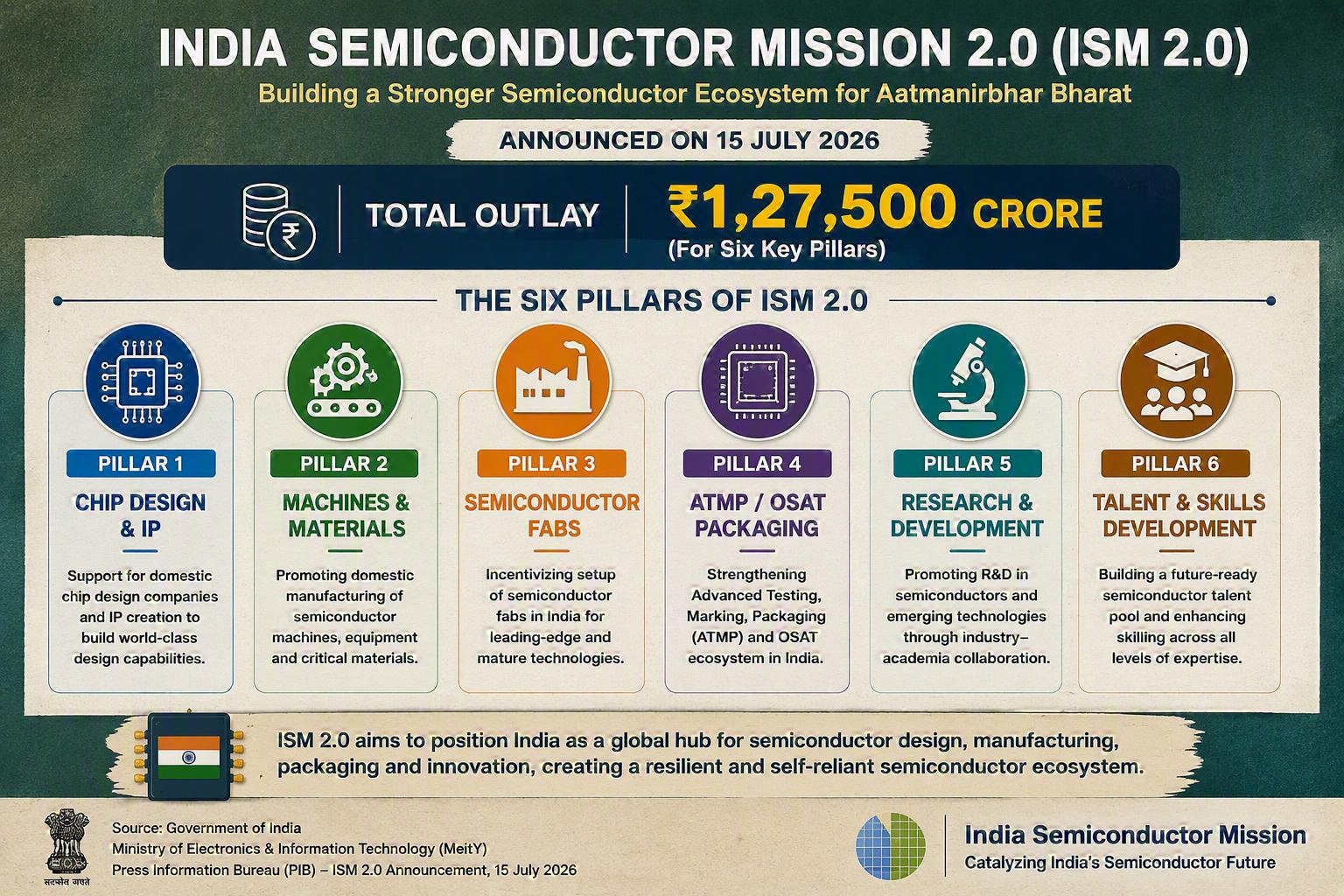
Figure 1: India Semiconductor Mission 2.0 fund allocation announcement on 15 July 2026.
ISM 2.0 focuses on:
- Pillar 1: Chip Design & IP
- Pillar 2: Machines & Materials
- Pillar 3: Semiconductor Fabs
- Pillar 4: ATMP / OSAT Packaging
- Pillar 5: Research & Development
- Pillar 6: Talent & Skills Development
The first phase focused on getting fabs, assembly, testing, marking, and packaging facilities off the ground. ISM 2.0 goes a step further by strengthening the industries that enable semiconductor manufacturing (read article on different layers in the semiconductor ecosystem). Semiconductor equipment, specialty chemicals and materials, indigenous chip intellectual property (IP), research and training centres, and more resilient supply chains are emphasized in this phase.
This clearly addresses a central question: how can India build an ecosystem that can sustain a globally competitive semiconductor industry for decades?
A semiconductor powerhouse is not defined by the number of fabs alone. It is built by multiple interconnected companies producing photoresists, specialty gases, silicon wafers, packaging materials, manufacturing equipment, design software, testing solutions, and highly skilled talent.
The first chapter of India's semiconductor journey was about recognizing its dependence, and the second chapter was about building fabs. Now the focus is clearly on the entire ecosystem. If India succeeds, 2035 may well become the year it became a global powerhouse.
Comments and reactions